A medium in one brand and a medium in another are both correct and both different garments. The letter on the label is a market segment rather than a measurement, and the reason two sizes can both fit is that they were cut to different amounts of stretch under load. Comparing the labels tells the buyer nothing. Comparing measurements tells them most of what matters.
The trap is treating a size chart as a body measurement when it is usually a body measurement plus an intended ease. A compression garment is cut with negative ease, meaning it is smaller than the body it fits. A relaxed training top is cut with positive ease, meaning it is larger. Both can carry the same letter. A chart that gives a chest range without saying which of those is intended is only half the information.
Compression changes the cut, not just the number#
The intended fit of a garment is set before the size chart exists. A garment designed to compress is cut smaller than the body so that the fabric is stretched when worn, and the fabric’s elastane and knit structure then apply the pressure. A garment designed to be relaxed is cut larger than the body, and the fabric does none of that work.
That difference changes which size is right by more than one step in some cases. A compression tight and a relaxed tight in the same stated waist size can differ by several centimetres of flat fabric. In practice this means the compression garment feels too small when it arrives while fitting exactly as designed, and the relaxed garment feels correct when it arrives and hangs loosely once it is on.
Where a garment states graded compression, generally lower at the ankle or wrist and higher at the calf or thigh, the change in cut along the length is deliberate. A buyer used to relaxed sizing who orders the same letter will often find the ankle and the thigh cannot both be comfortable, which is a sign the wrong letter was chosen rather than a manufacturing fault.
Measuring the body, then the garment#
Two measurements solve most cross-brand comparisons: the body measurement and the flat garment measurement.
For the body, measure the chest or the bust at the fullest point, the natural waist at the narrowest point above the navel, and the hips at the widest point, standing relaxed rather than holding the breath. Then measure the thigh at the widest point for tights and shorts, since thigh circumference is often the constraint that decides the size in a fitted bottom.
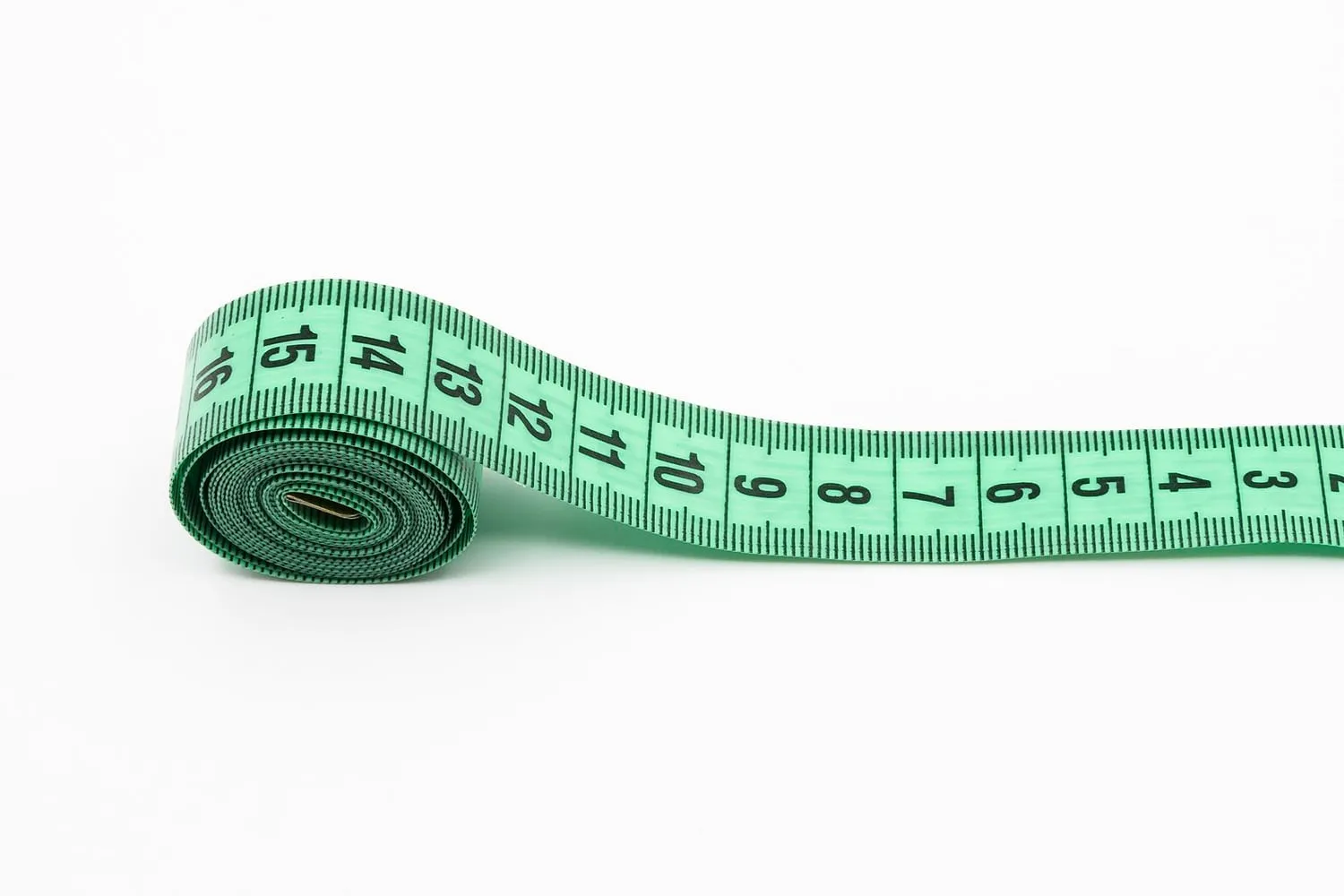
For the garment, lay it flat and measure across the chest from one armhole seam to the other, and across the waistband from edge to edge. Double that number to compare with the body circumference. The difference between the two figures is the ease, and it is negative in compression garments.
A worked comparison: a flat chest width of 44 cm on a top gives a garment circumference of 88 cm. On a 92 cm bust that is 4 cm of negative ease, which is a close fit and appropriate for a knit with elastane. The same 44 cm on an 84 cm bust is 4 cm of positive ease, which is a relaxed fit. The same number therefore describes two different garments, and only the body measurement tells you which one has been bought.
Inseam, rise and the trouser trap#
Bottoms fail across brands more often than tops, and the reason is that length is distributed across two dimensions that charts often state imprecisely.
Inseam is the inside leg length from the crotch seam to the leg opening. Two tights labelled the same letter can share a waist size and differ by several centimetres of inseam, which changes where the hem sits on the calf or the ankle. A hem that lands at the widest part of the calf will ride up during a run.
Rise is the distance from the crotch seam to the top of the waistband, measured front and back separately. A high rise sits at or above the natural waist and stays in place under movement. A low rise sits below the hip crease and slides down in a squat. Because rise is measured differently across brands, and sometimes not published at all, it is the most reliable thing to measure on a garment the buyer already owns and likes.
The practical method is to take the favourite pair, lay it flat, and record four numbers: waistband width, front rise, back rise and inseam. Those four numbers, compared with a listing’s figures or a shop’s measuring tape, transfer between brands more reliably than any size letter.
Men’s and women’s charts#
Two separate charts describe the same bodies with different labels, and the cut differences go beyond the letter.
Men’s charts are usually built around chest, waist and occasionally neck, with a straighter cut through the torso. Women’s charts are usually built around bust, waist and hips, with shaping through the waist and hip. A garment from one chart worn by a body closer to the other will often fit in one zone and not in another, which is why a single letter rarely works across both.
The pragmatic approach is to ignore the chart’s category and read the garment’s own measurements and its photographed or stated fit. Where a garment is offered in both charts and the stated body measurements overlap, the deciding factor is usually which pattern includes the shaping the wearer needs, not which label is conventional.
A repeatable comparison method#
Four steps make ordering across brands predictable.
- Record four body measurements and keep them somewhere accessible, including thigh circumference.
- Measure a garment that already fits well, laid flat, in the four numbers that apply to its category, and note the fibre content, since elastane content explains why a garment with those numbers feels as it does.
- Ask for, or find, the same flat measurements on the garment being considered, rather than the size chart alone. Many listings publish a chart with flat garment measurements alongside body ranges; where only one is given, it is usually the body range.
- Compare ease rather than circumference. A difference of a few centimetres in ease between two garments of the same letter is expected, not a fault, and the question is which ease matches the intended use.
Where a listing gives no measurements at all, and the brand is unfamiliar, the honest position is that the size cannot be predicted from the letter. Waiting for a chart is cheaper than returning a garment.
Before ordering again#
The single most useful habit is to build a short personal record of flat measurements for each category that matters: a training top, a fitted bottom, a compression piece and a short. Fibre content belongs in the same note, because it explains the difference between two garments with identical measurements and different feel.
Then treat fit feedback as a mechanism rather than a verdict. A waistband that rolls, a hem that rides and a shoulder that pulls are all evidence about measurements, and the fix is usually one specific number rather than a different size in the same letter. Ordering one size up rarely solves a rise problem, and ordering one size down rarely fixes a loose armhole.