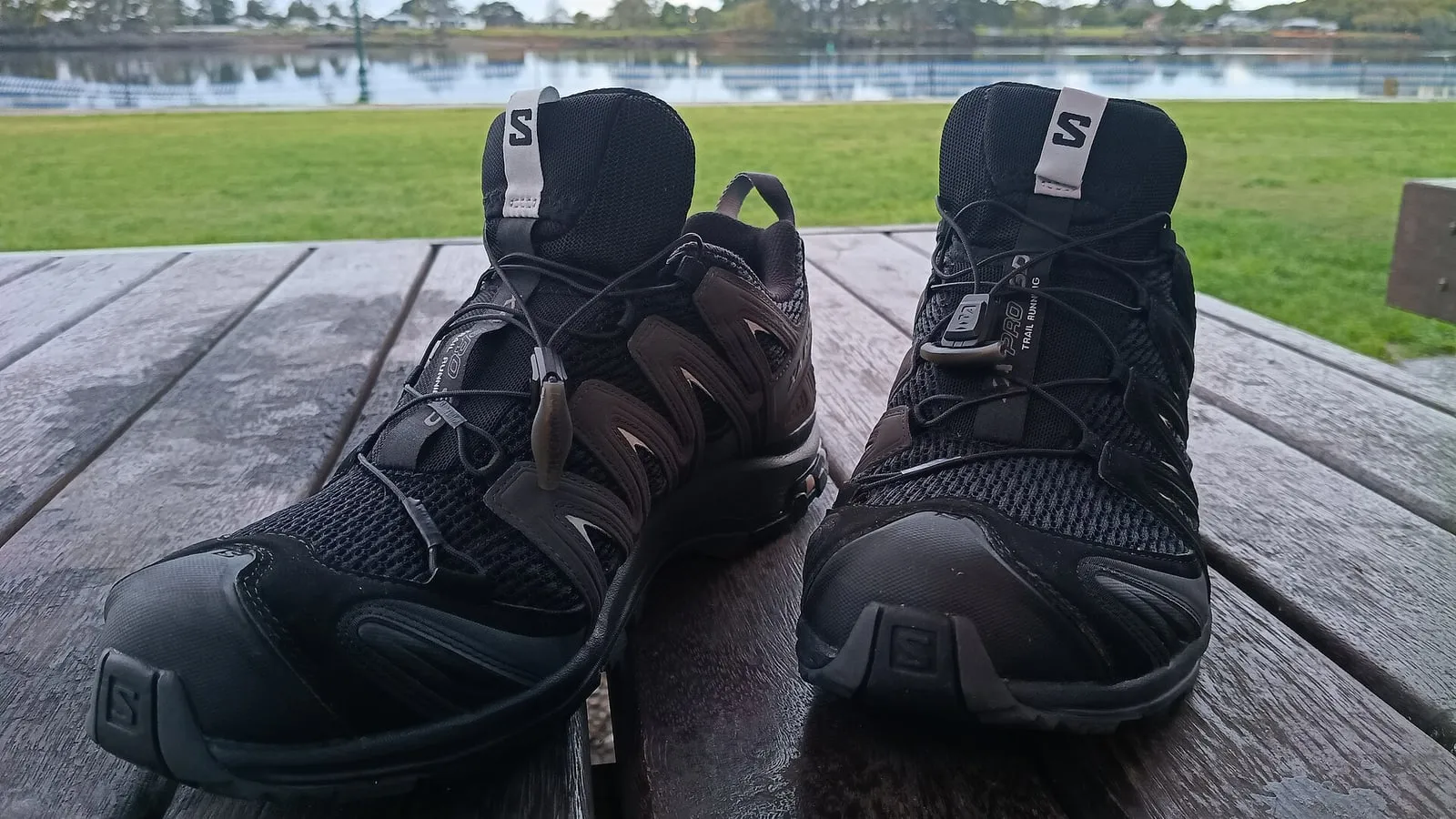
Training shoes are not one category. The shoe that is ideal for a heavy squat is close to useless for a long run, and a shoe built for running is unstable under a loaded press. Before you look at any shoe, name the surface and the dominant motion, and the choice becomes much simpler.
Begin with the surface and the session#
Gym floor, track, road, court and trail each ask something different of a sole. Then name the motion: straight ahead, lateral, or standing still under load. A shoe has to be built around the answer, because cushioning, stability, grip and flexibility are traded against each other rather than combined freely.
Once you have those two answers, the shoe’s job is clear. Everything else, colour, trim and which season it was released in, is detail.
Lifting and general gym work#
For lifting you want a firm, stable base. A shoe with a dense, barely compressible sole gives you a solid platform, and a slightly raised heel helps if you squat with limited ankle mobility, because it lets the knee travel forward without the heel lifting. A flat, thin sole is the alternative and works well for deadlifts, where you want to be as close to the floor as possible.
The upper should lock the foot in place without squeezing it. Lace the shoe and check that the heel does not slide. For general gym work that mixes lifting with some movement, a firm trainer with a moderately firm sole is a reasonable compromise, though it will not be ideal for either extreme.
Running and treadmill sessions#
Running shoes are built around cushioning and a smooth transition from heel to toe. The two variables that shape the ride are the drop, meaning the difference in height between the heel and the forefoot, and the amount of cushioning underfoot. A higher drop tends to suit people who land on the heel; a lower drop asks more of the calf and ankle.
A neutral shoe works for many runners. A stability shoe adds support for feet that roll inward significantly. This is a fit question more than a performance one, and it is worth choosing based on comfort over a few minutes of jogging rather than on a category label. Treadmill running is still running, so the same logic applies, though people often prefer a slightly lighter shoe indoors.
If you run and lift in the same session, one pair of shoes will always be a compromise. Many people carry two.
Court sports and lateral movement#
Court shoes are built for stopping and changing direction. They have a wider base, a more supportive upper and outsole rubber formulated for grip on a smooth indoor surface. The critical feature is lateral stability: when you push off to the side, the shoe should hold your foot over the sole rather than letting it roll off the edge.
Look at how the upper wraps the midfoot, and whether the outsole flares beyond the upper at the base. A shoe that grips well but flexes too much sideways will leave your ankle doing the work. Court surfaces also wear outsole rubber quickly, so the pattern and the compound matter more here than in most training shoes.
Studio, dance and barefoot-style training#
Studio work often rewards a lighter, more flexible shoe with a thin sole, because much of the movement is controlled and the foot benefits from feeling the floor. For lifting-style classes and general training, a firm low-profile trainer works well. Some classes are done barefoot or in socks, and that is a decision about hygiene and grip as much as about training.
Barefoot-style shoes with minimal cushioning are a distinct choice. They ask the foot and calf to do more work, and they suit some people and some sessions. If you are used to cushioned shoes, change over gradually rather than swapping overnight.
Hiking and mixed terrain#
Off the gym floor, you want grip and protection. A deeper lug pattern bites into soft ground; a harder compound lasts longer on rock; a firmer midsole saves your feet on rough terrain. Ankle support is a matter of preference and conditions, but for uneven ground the shoe’s stability and the fit around the heel matter most.
Water resistance is a trade-off. A waterproof membrane keeps water out but also keeps it in, so a wet foot stays wet longer. In warm conditions a quick-draining mesh shoe is often more comfortable than a waterproof one.
What to look at inside the shoe#
Take the insole out and look at the base of the shoe. A flat, smooth base with no seams under the arch is less likely to irritate. The shape of the last, the mould the shoe is built on, determines the toe box width and the curve of the sole. Feet are not universally shaped, and a shoe that is too narrow at the toes will cause problems regardless of how good the cushioning is.
Check the heel counter, the stiffened part at the back. It should hold the heel without pressing on the Achilles tendon. Check the flex point too: bend the shoe where your foot bends, at the ball, and see that it flexes there rather than in the middle of the arch.
Uppers and how a shoe ages#
Upper materials affect breathability and durability. Engineered mesh is light and ventilated and is common on running shoes. Knit uppers wrap closely and feel comfortable immediately, but they can stretch over time. Synthetic leathers and coated fabrics resist abrasion and clean up well, but they breathe less.
Seams and overlays are where uppers fail. Bonded overlays avoid stitching that can rub, but they can peel if they meet a lot of flex. Look at the toe area and the flex zone, because those are the first places to show wear. If you can, try the shoe on late in the day, when feet are slightly larger, and with the socks you actually train in.
Buying a shoe for the work you bring it#
A shoe is a tool with a narrow job. Decide whether you need stability, cushioning, grip or ground feel, then buy for that and accept the trade-offs. If your training genuinely spans two very different needs, two pairs of adequate shoes will serve you better than one pair that is good at neither. Replace shoes when the midsole stops feeling supportive or the outsole is worn through, rather than on a calendar.