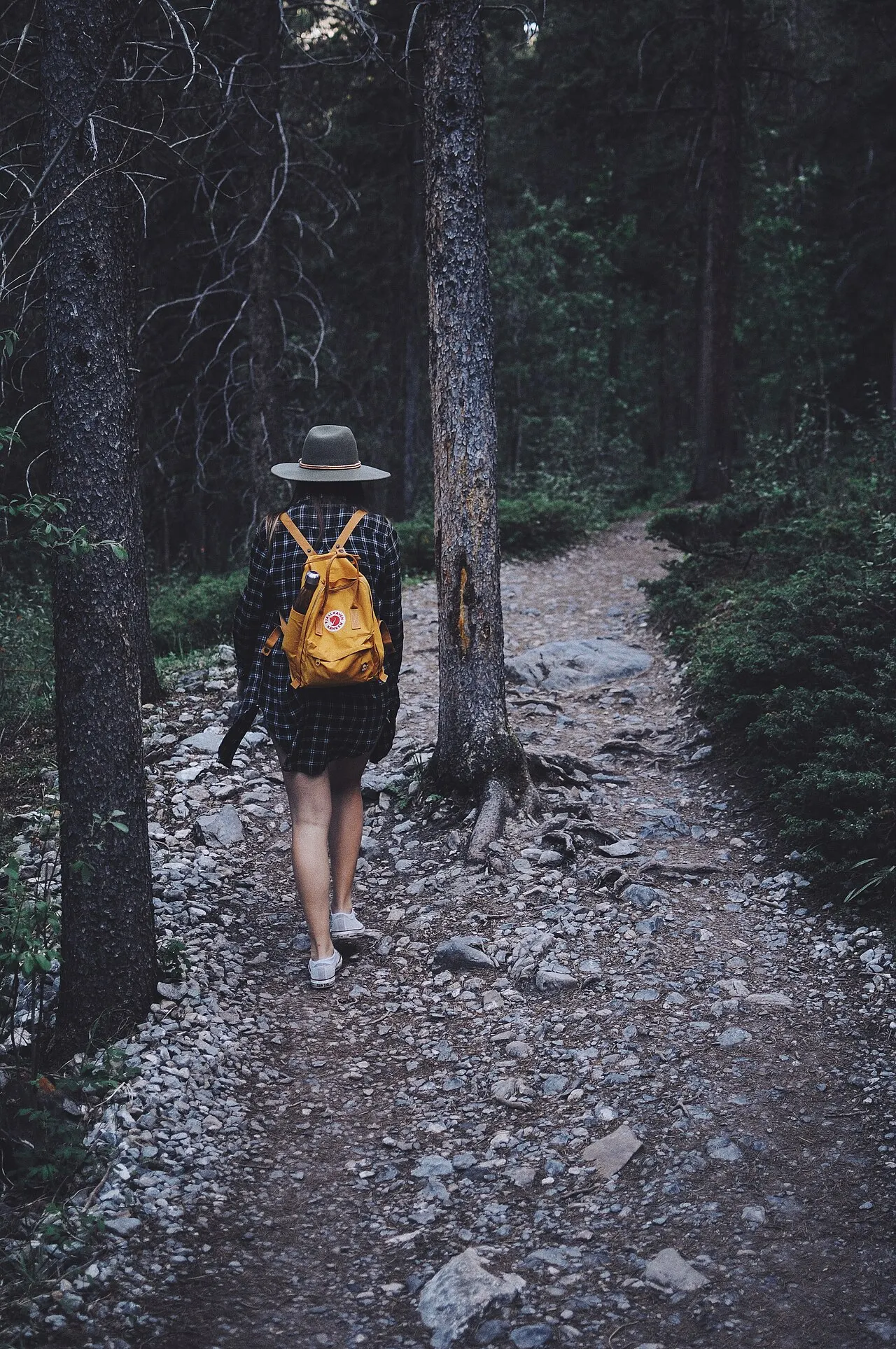
Twenty-four hours outside. You need to sleep warm and handle a weather change, and you don’t want to haul expedition gear for one night.
Buying the smallest version of everything won’t get you there. Pick pieces that overlap.
This assumes a managed trail, a reasonable forecast and a night in a hut, shelter or vehicle. On a remote route, add navigation and emergency gear suited to the conditions. Lighter is the aim. Fragile isn’t.
Wear the heaviest layer#
Start with what you’ll wear on the move. A light synthetic tee or merino base, a thin fleece or grid fleece, stretch trousers and a wind-resistant shell cover most cool days. If rain’s likely, swap in a waterproof shell and leave the extra windbreaker home.
Wear the trail shoes and the thickest socks. Pack a second pair of socks and a dry base layer in a waterproof bag. Those two give you a warm, dry reset at camp for almost no space. The other big layer is a light insulated jacket: worn at breaks, in the shelter, and as part of your sleep system.
Shelter by forecast#
Sheltered night? A tarp or light one-person tent is enough. Practice the pitch before you go, especially if you’ve never put it up in wind or rain. A bivy bag saves weight but can feel cramped and collect condensation; for one night, a small tent is usually easier to live with.
Bring stakes that suit the ground. Sand, loose rock and hard-packed soil each want a different shape. A few spare cord loops and a repair patch beat a big tool kit. Uncertain forecast? Take the slightly heavier shelter and drop a luxury item instead.
Sleep warm, less bulk#
A bag rated for the expected temperature beats one you hope will be warm enough. Add a closed-cell mat or short inflatable if the ground’s cold. The mat matters as much as the bag, since it stops heat draining into the ground.
Sleep in the dry base layer, not the one you sweated in. A light liner keeps the bag clean and adds a little warmth. If the bag runs slightly cool, a warm hat and dry socks help more than another shirt. Keep the shelter ventilated, because condensation makes everything feel colder by morning.
Food: compact, salty, easy#
One night doesn’t need a menu. Mix quick energy with one proper meal. Nuts, dried fruit, something savory and a couple of bars are easy on the move. For dinner, a dehydrated meal, instant noodles or a dense wrap all work, if you know how much water and fuel they need.
Pack one extra snack, not an extra dinner. It covers a late finish or a slow section without a full meal’s weight. Using a stove? Check the canister has enough fuel and the pot setup fits your shelter’s ventilation plan.
Water and treatment#
Carry only what you need between reliable sources, plus a way to treat it. A filter is fast and leaves taste alone; purification tablets are lighter but take time. Soft bottles fill easily from shallow streams; hard bottles pair better with a filter and leak less inside the pack. A squeeze filter like the Sawyer Squeeze (0.1-micron hollow fiber) usually runs $37–$46, per sawyer.com and outdoor retailers, Oct 2026.
Know where the last reliable water is and how much gets you to the next. In heat, carry more than feels comfortable and drink before the climb. Electrolyte tablets help on long days. They don’t replace water.
The small kit#
Headlamp, small power bank, basic first-aid kit, repair patch, lighter, and a map in a clear sleeve. One pouch, so you can find it all in the dark. Add a sit pad if you like proper food stops, and a light towel if you’ll swim or wash. A headlamp such as Black Diamond’s Spot 400 (400 lumens max, with a red night mode) usually runs $48–$60, per REI and Black Diamond, Oct 2026.
Skip the tool for every possible failure. Carry what matches your shelter, stove and shoes. A short length of cord, a spare buckle and a patch fix more than a heavy multi-tool.
Final check: ten minutes#
Load everything, tighten the straps, walk around for ten minutes. Nothing should press on your back, swing when you turn, or sit high enough to block your view. Too full? Pull the least useful item rather than crushing the shelter into a shape you can’t repack in the rain.
Organized first. Light second.