A jacket that stuffs into its own pocket. A pack that hugs your back. Socks that survive a wet crossing.
Trail kit has gotten lighter, comfier and, at its best, less specialized. The upgrades that change a day out are often the unglamorous ones, not another gadget. These six solve common problems on a day hike or a fast overnight, where weight and bulk matter but comfort comes first. You don’t need all of them. Start with whichever problem you actually have.
1. A packable layer with real warmth#
A light synthetic jacket keeps some warmth when damp, packs small and doesn’t need down’s careful handling. Close but not tight fit, a hood that stays up in wind, enough length to cover your hips when you sit.
It doesn’t have to be ultralight. A slightly denser face fabric survives branches and pack straps better and usually looks better after a few seasons. Make this your one bright layer and keep the rest quiet: easier to find in the pack, and it gives the outfit a deliberate accent.
2. A shell with a hood that adjusts#
Shells get judged on waterproof ratings, but fit and hood design matter just as much. A good hood turns with your head, covers your face without blocking peripheral vision, and cinches with one hand. Pit zips help if you climb in the wet. If you mostly walk, a simple chest pocket is enough. Patagonia’s Houdini windbreaker shows how little a wind layer needs to weigh: 105 g (3.7 oz) for the men’s and 96 g (3.4 oz) for the women’s, about $119 at patagonia.com as of Oct 2026.
Check seams and zip guards before the first trip. A light shell will eventually wet out, especially at the shoulders where straps rub. Wash-in or spray-on repellent restores the surface. It can’t fix a leaking seam.
3. A daypack that sits close#
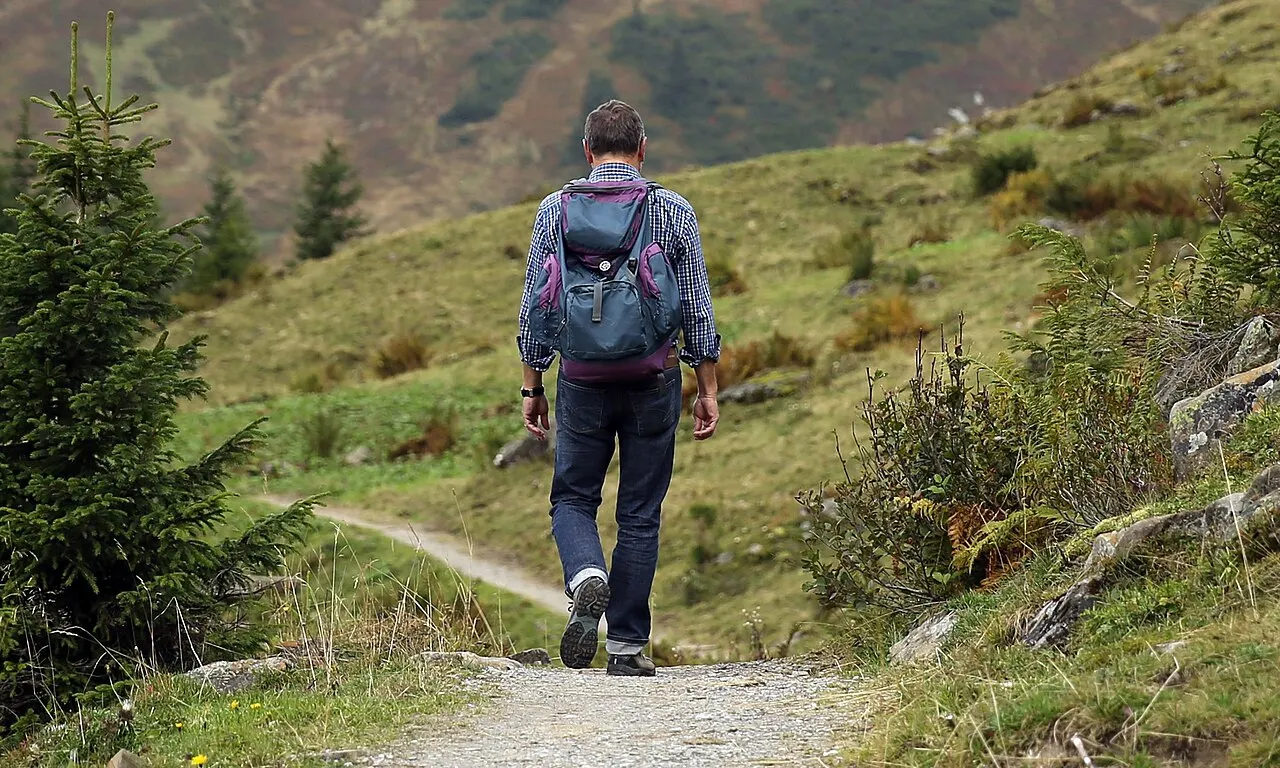
Stable beats light. A pack that sits off your back looks airy but can drag at the shoulders once loaded. Look for a short back panel, a supportive hip belt on bigger volumes, and compression straps so a half-full pack doesn’t sag.
For a fast day, 18 to 24 liters holds a shell, water, food, a small first-aid kit and a camera. For an overnight, start at 30. Access beats pocket count: you should reach water, map or a layer without emptying the bag.
4. Socks with a real heel#
A sock that fits makes a trail shoe feel more stable. Defined heel pocket, snug midfoot, toe box that doesn’t squeeze. Merino blends are comfortable across a wide temperature range; synthetics dry faster and usually last longer in abrasive shoes. Darn Tough’s Run Quarter Ultra-Lightweight sock usually runs $19–$21, per darntough.com and GoBros, Oct 2026, and the brand guarantees its socks for life.
On a long day, bring two pairs. A dry change at the car or hut is a tiny weight cost for a big comfort payoff. Crossing water? A thin liner sock can reduce friction, but only if it fits without wrinkles.
5. Wet stays away from dry#
Skip the packing cube set. One small dry bag for phone and electronics, one mesh bag for wet socks, one flat pouch for repairs. The dry bag doubles as a pillow or laundry bag; the mesh lets damp kit breathe instead of soaking everything else.
Keep the repair pouch small and specific: a couple of meters of cord, a shell patch, a few zip ties, blister plasters, a spare lace. A multi-tool only if you know which part you’ll use. Clutter hurts more than weight, because clutter is what makes you unpack the whole bag for one item.
6. Navigation without signal#
A phone is a decent map, not a full navigation system. Download the route before you leave, carry a small power bank in cold weather (batteries drain faster), and know how to read the map without the blue dot. A paper map in a clear sleeve costs almost nothing and works when the battery doesn’t.
Familiar trail: offline maps and a compass usually cover it. Remote route: a dedicated GPS or satellite messenger, and tell someone where you’re going. The best tech here is whatever keeps working when the weather changes, not the brightest screen.
Overlap, not ownership#
Owning every category isn’t the goal. A shell that blocks wind, an insulated layer that works on its own, a pack that stays stable, and a navigation plan that doesn’t hang on one device cover most days. Anything else earns its place by fixing a problem you’ve actually had.