Chafing is usually blamed on sweat, and sweat is only the messenger. The abrasion itself comes from fabric and thread moving against skin, repeated at the same place, thousands of times. Where that happens is decided by construction and fit rather than by the fabric alone, which is why two garments in the same material can rub in completely different places.
The usual mistake when a garment chafes is to change the fabric. A closer reading of the garment shows something more specific: a raised seam running along the inner thigh, a hem that has flipped and now presents its folded edge, a woven label at the centre back that has stiffened with salt, or a waistband whose elastic has started to fold over. Each of those has a different remedy, and none involves a softer fibre.
What makes a seam rub#
A seam is where two pieces of fabric are joined, and joining them creates a ridge. The ridge profile, its stiffness and its position are what determine whether it rubs.
Three factors decide the profile. The first is height: a seam that stands proud of the surface presents an edge that can catch and drag. The second is thickness and stiffness, since a thick, tightly stitched seam resists conforming to the body and instead presses against it at a point. The third is thread, because the stitch line itself can be coarser than the fabric it sits on, particularly where a low-quality thread has frayed or formed hard knots.
Sweat changes the equation by softening skin and by leaving salt crystals in the fabric and thread, which makes an abrasive surface more abrasive. That is why a seam that is fine for a thirty-minute session becomes a problem at ninety minutes.
Overlock, flatlock, bonded and taped#
The four common ways of joining technical fabric behave differently against skin.
- Overlock. A stitch that wraps the fabric edges with several threads, fast and strong. It leaves a raised seam with a measurable thickness, and it is commonly used on side seams and hems where the seam does not sit against skin. Overlocked seams are rarely the right choice along an inner thigh or under a strap.
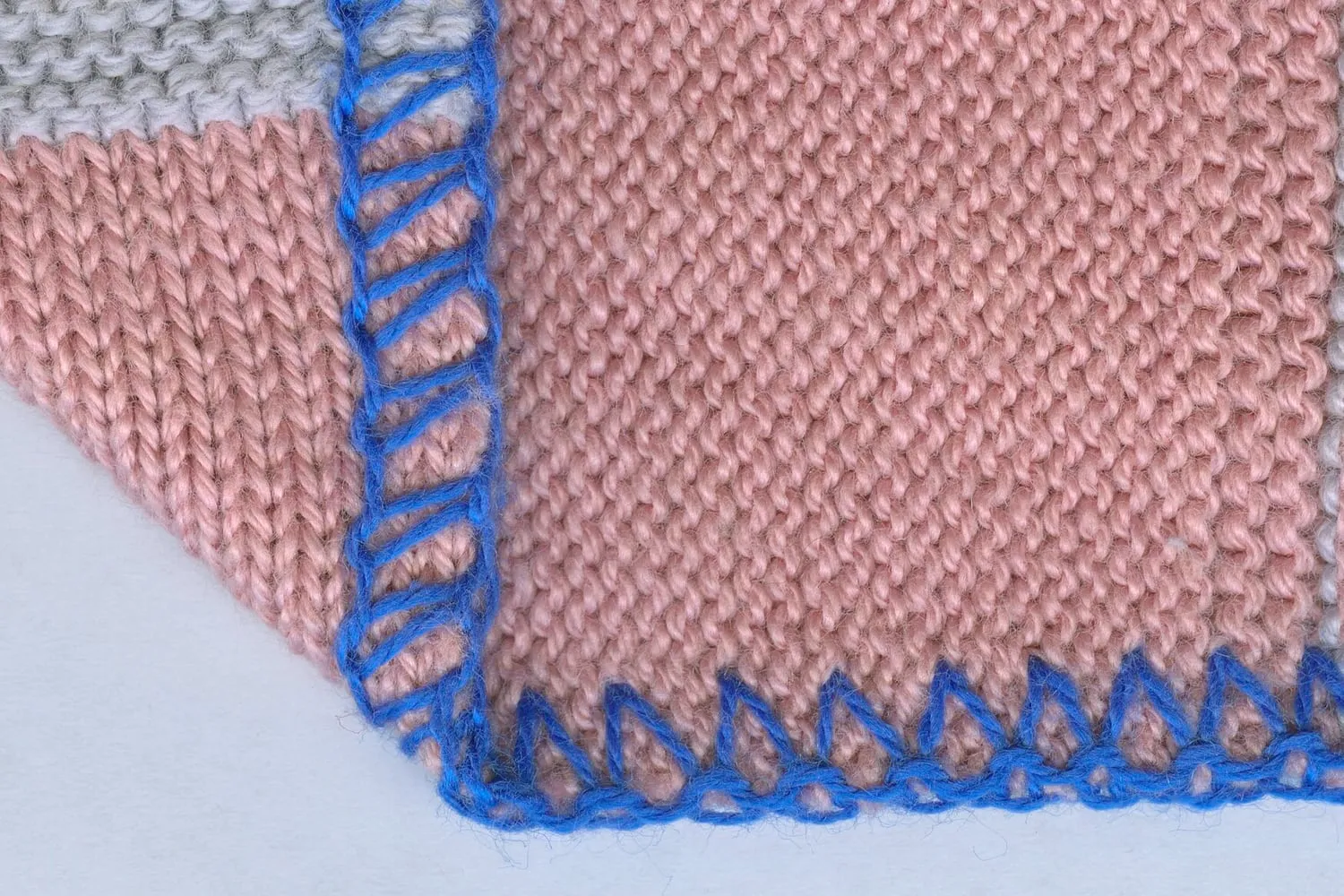
- Flatlock. Two panels joined with the seam allowance folded flat and stitched through, so the finished seam lies almost flush with the fabric. It is the standard for high-friction areas in tights, base layers and tops. A true flatlock is not perfectly flat: it shows a narrow ladder of stitching on the outside, and under load it can stand slightly proud. Its advantage is that the surface is continuous rather than ridged.
- Bonded. Panels joined with adhesive and heat rather than thread, so there is no stitch line at all. Bonded garments are smooth and light, and they depend on the adhesive holding through repeated washing and stretch. When a bonded seam fails it tends to delaminate over a length rather than open at a point, and it is difficult to repair.
- Taped. A stitched seam covered with a strip of fabric or film. Taping is used where waterproofing or additional strength matters, and the tape itself is an added edge. In activewear, taped seams appear on outer layers and on the shoulder seams of some tops.
Where seams sit and what they sit under#
Placement matters more than type in many garments, because a seam in the wrong place will rub whatever its profile.
The high-risk zones are consistent across activities: the inner thigh and the crotch, where a seam under load presses directly on soft skin; the underarm, where a side seam meets the bra band; the shoulder, under a pack strap or a barbell; the centre back, under a waistband; and the hem of a short or a top that moves across the body.
Two placement decisions make a visible difference. The first is a gusset, the extra panel at the crotch of tights and shorts, which moves the seam junction away from the highest-stress point. The second is offsetting, where a side seam is moved forward or backward so that it does not run under a strap or meet another garment’s seam.
Thread, stitch density and hems#
Thread is chosen for strength and for how it behaves when the fabric stretches. A thread with some stretch, such as a textured polyester, moves with a knit. A non-stretch thread in a stretchy garment will either break or pucker the seam as the fabric extends. Stitch density matters in the other direction: very dense stitching perforates a knit and creates a stiff, ridge-like seam, while very sparse stitching leaves gaps that can open under load.
Hems are the second place abrasion starts. A folded and stitched hem at the leg opening of a short presents a doubled, stiffer edge at exactly the point where the thigh moves. A raw or bonded hem is smoother but can curl when the fabric is cut on a curved edge. A hem that has begun to flip is a reliable sign that the garment will chafe, because the folded edge now faces outwards and drags.
Labels, zips and other hard edges#
Items sewn into a garment are often the source of a rub rather than the seams. Woven labels at the centre back and the side seam stiffen with sweat and salt and become abrasive, which is why printed or heat-transferred labels are preferable in high-friction areas. Care labels in a side seam can do the same, and can be cut out if the construction allows it.
Zips present a different problem. A zip with a metal pull and a metal slider is a hard object against the body; a zip garage or a fabric flap over the top of a zip covers the pull. Zip ends and the top of a slider are common sources of a sore point under a chin or at the back of the neck.
Fit conditions that create rub#
Construction sets where a garment might rub, and fit decides whether it does. Loose fabric bunches and then drags in folds. Tight fabric stretches thin and presses against a smaller area at higher pressure, which concentrates abrasion. The worst case is a garment that is loose in the body and tight at a specific point, such as a waistband that grips while the fabric above moves.
Movement direction matters as well. A seam that runs across the direction of travel, horizontally across a thigh during a run, is dragged repeatedly. A seam that runs along the direction of travel is passed over rather than caught.
Judging a garment for chafe risk#
Turn the garment inside out before buying and run a hand along the inside surfaces, particularly the inner thigh, the underarm, the strap line and the centre back. Any ridge that can be felt with a fingertip will be felt by skin. Check that the seams in those areas are flatlock, bonded or offset away from the contact point, and that the labels there are printed.
Then look at the hems: a doubled hem at a leg opening, on a garment that will be worn for long sessions, is a point to watch. Finally, put the garment on and move in it, since a seam that disappears against a relaxed body can stand proud once the fabric is stretched over a bent knee or a raised arm.
Where a garment does chafe and the construction is sound, the usual fix is the fit rather than the fabric: a longer short, a different strap line, or a base layer under the garment that moves friction onto a replaceable layer. Where the construction is at fault, no amount of adjustment will help.