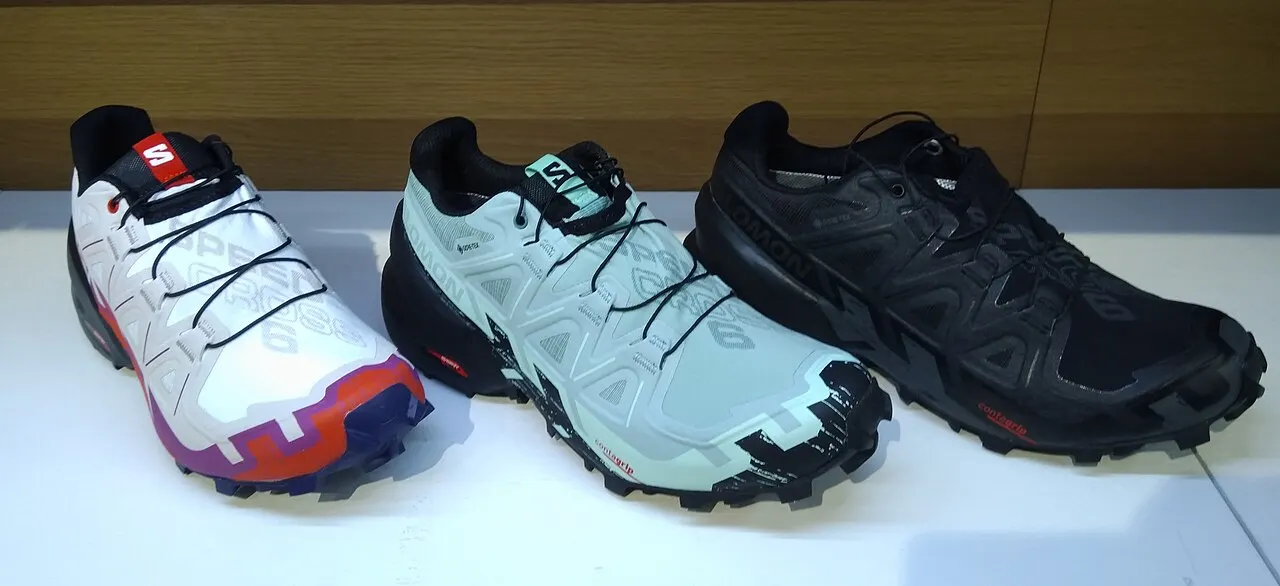
Light and fast, or protective and heavy. That used to be the whole trail shoe decision.
Not anymore. Foams are softer without feeling wobbly, uppers are comfier, and outsoles handle a wider range of ground. The category is more useful and the marketing is harder to read.
Three things still decide it: the ground you cover, the shape of your foot, and how long you’re out. A shoe that feels brilliant on a dry forest path can clog in mud. Maximum grip can feel slow and noisy on pavement. Pick the route first, then the features worth carrying.
Flip it over: outsole first#
The outsole tells you more than the color or the brand story. Lugs around 3 to 4 mm are a good all-rounder for gravel, packed dirt and rocky paths. Deeper lugs help in mud and loose ground but wear faster on hard surfaces and can feel vague on wet rock. HOKA’s Speedgoat 6, with 5 mm lugs on a Vibram Megagrip outsole and a 4 mm drop, usually runs $116–$155 depending on sales, per Fleet Feet, Oct 2026.
Rubber compound matters as much as lug shape. Softer compounds grip wet stone better; harder ones last longer on abrasive trails. Splitting time between road and trail? Go shallower and denser instead of a specialist mud shoe. Long days on exposed rock? Grip and a protective rock plate matter more than weight.
Foam: judge it at hour one, not minute five#
Some shoes feel gloriously soft for five minutes and then collapse on a long descent. You want foam that springs back rather than staying squashed. A wider platform and a slightly denser midsole can make more difference than a few grams, especially with a pack or on technical ground.
Rock plates help on sharp, uneven trails, but they aren’t automatically better. A flexible shoe lets your foot read the ground and feels more natural on smooth paths. For most people, the best compromise is a flexible forefoot with a bit of extra protection under the heel and midfoot.
The upper should disappear#
It should hold your foot without pressure points. A reinforced toe bumper fends off stones, a gusseted tongue keeps debris out, and the heel counter should grip without digging into the Achilles. Lacing systems matter less than overall fit, though a lace loop that lets you adjust the forefoot separately can help.
Drainage helps in the wet, but very breathable mesh lets in fine dust and grit. A durable textile upper with a little stretch is often the best bet for mixed weather. In cold rain, a slightly thicker upper with a water-resistant treatment can beat a fully waterproof membrane, which may trap sweat.
Fit for the downhill#
Secure at the heel, roomy at the toes for swelling and movement. A thumb’s width beyond your longest toe is a reasonable start, but the real test is downhill. Stand on a slope or step off a box. Toes hitting the front, or the heel lifting a lot? Wrong fit.
Bring the socks you actually trail run in. A thin sock can make a shoe feel half a size bigger; a thick one can turn a comfy shoe into a pressure point. If you use insoles, test with them in.
When a road shoe wins#
Plenty of people run gravel paths and smooth packed trails where a road shoe with a slightly deeper outsole is faster and more comfortable than a technical trail model. Road shoes are generally lighter, smoother underfoot and easier on long stretches of pavement.
Get a dedicated trail shoe if you regularly hit mud, loose rock, roots or long descents. A hybrid if your route is mostly dry and non-technical. The ground under your feet matters more than the label on the box.
Off the trail#
Trail shoes don’t have to look like specialist kit anymore. A clean upper, one bright accent and a modern sole work with technical trousers or everyday clothes. The test: does it look deliberate when the run’s over? Salomon’s XT-6 is the trail shoe most often seen off the trail; it has a 10 mm drop and Mud Contagrip outsole and is about $185 at salomon.com as of Oct 2026.
Wearing the same pair around town? Watch the outsole. Soft trail rubber wears quickly on pavement, and deep lugs feel unstable on smooth floors. A moderate trail shoe is usually the best crossover; save a dedicated race shoe for the runs that justify it.
Short route first#
Before a long day, take them on a short one. Check heel hold, toe room, arch pressure, and how the outsole behaves on wet stone. A good trail shoe feels capable without making every step a compromise.