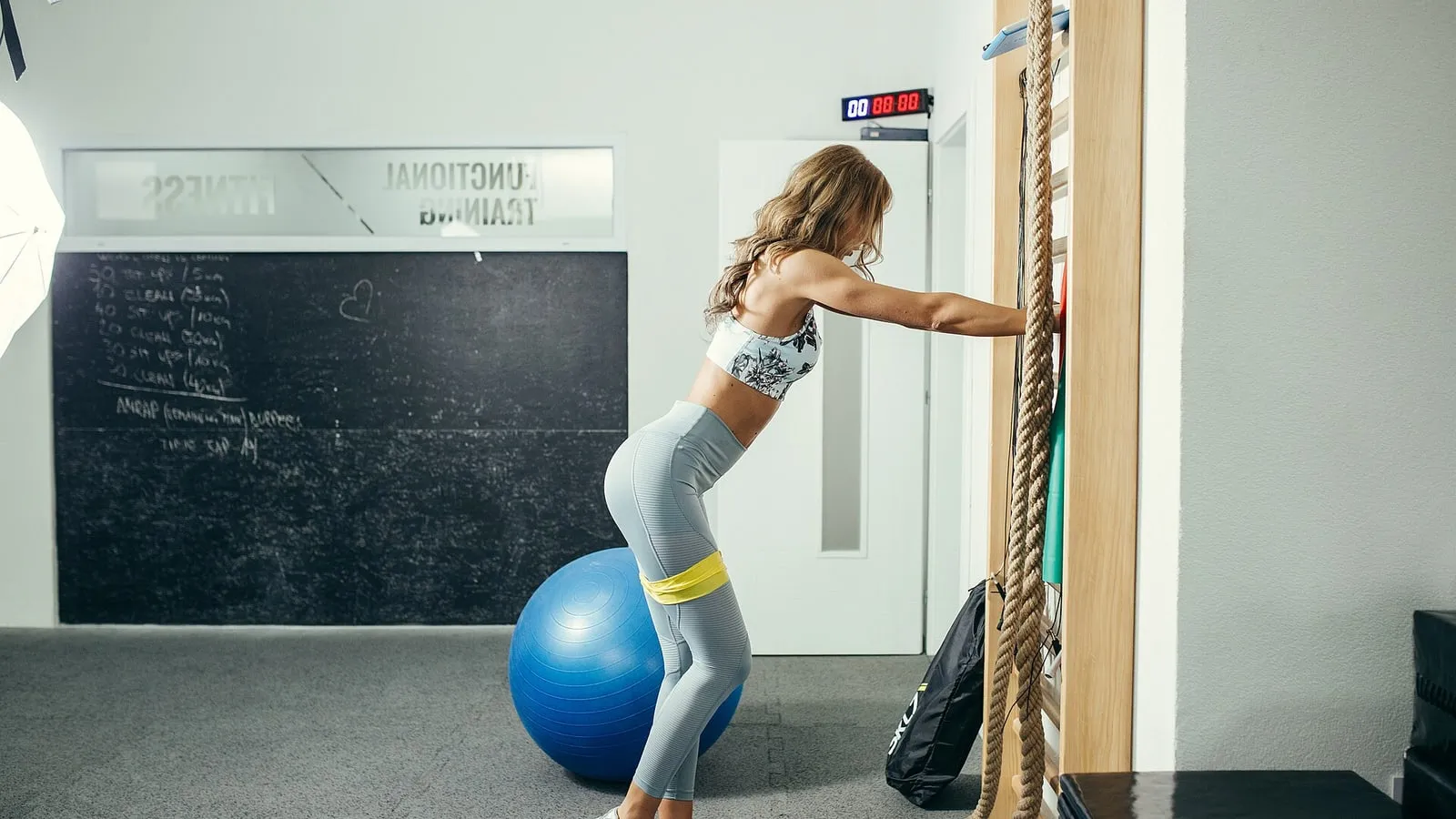
An accessory earns its place if it solves a problem you actually have, at a frequency that justifies carrying it. The bag is a limited space, and every item in it competes with a spare layer or a bottle of water. We apply a simple test: does this change what I can do, or only how I feel about doing it?
The test for anything that goes in the bag#
That test rules out a lot of kit, which is the point. Start with the specific failure you are trying to fix. Hands giving out before your back does on a pull, feet blistering on long runs, a knee that feels exposed under a heavy squat, a phone bouncing in a pocket. A real problem has a visible symptom and a repeatable pattern. Go shopping with that pattern in mind, and most accessories will eliminate themselves.
The second question is whether you will carry it. Anything that stays at home after two weeks did not pass the test, however well it worked on the day you bought it.
Socks: the smallest piece with the largest effect#
Socks are the most underrated piece of training kit. They sit between your skin and your shoe, and they decide how much friction reaches your foot. Cotton holds moisture and softens when wet, which is exactly the condition that produces blisters. Synthetic and wool blends keep their structure and move moisture away.
Look for a smooth toe seam, a cuff that holds without digging in, and a fit that has no slack. Cushioning is a preference: more under the heel and ball suits long runs and court work, less suits lifting, where you want a direct connection to the floor. If you train often, several pairs of good socks will do more for your comfort than almost any other accessory.
Belts, straps and wrist wraps#
A lifting belt gives your trunk something to brace against. It does not replace core strength, and it is not needed for every set; its value is on heavy work, where you want the pressure inside your abdomen to have a wall. Width and thickness change how much of the torso the belt covers, and an uncomfortable belt is one you will not wear consistently.
Straps and hooks take grip out of the equation on pulling movements, which lets you train the back or the hips when your hands would otherwise give out first. They are useful on high-volume pulling and largely unnecessary elsewhere. Wrist wraps support the wrist under load, and are again a specific tool for specific lifts. All three should be fitted to your body rather than borrowed from whoever is nearby, because a strap in the wrong size changes the mechanics of the lift.
Knee sleeves and joint coverings#
Knee sleeves provide warmth and a sense of support, and many people find them helpful for the confidence they give as much as for anything else. They should not restrict the knee from bending. Measure the circumference around the knee rather than guessing from clothing size, because a sleeve that is too tight is uncomfortable and one that is too loose slides.
Sleeves are not a substitute for joint care. If a joint hurts in a way that is new or persistent, a sleeve is not the answer, and neither is pushing through it.
Bags, bottles and small tools#
A bag only needs to do two things: hold your kit and survive being dumped on the floor. Look at the base material, the zip and the strap attachment points, because those are the places bags fail. A separate compartment for wet or dirty kit is worth more than extra pockets.
A bottle should be easy to open with one hand and easy to clean. Wide-mouth bottles are easier to clean and dry; bottles with narrow mouths and complex lids are harder to keep sanitary. Small tools are individual choices: a foam roller, a lacrosse ball, a resistance band or a jump rope each solves a specific need, and each only earns its place if you actually use it. A band that is too light or too heavy does nothing.
Products for chafe, blisters and grip#
Chafe is caused by friction, moisture and salt, and it is far more common than most people admit. A balm or cream that reduces friction, applied before a session rather than after, is genuinely useful on long runs and in hot conditions. Blister plasters and tape are worth keeping in the bag if you are breaking in new shoes or walking long distances.
Grip aids, whether chalk, liquid chalk or a towel, matter in environments where the bar or the floor is slick. Clean hands slip, and that is a mechanical problem rather than a character one.
Trackers and what they change about training#
Wearables can be useful for pacing and for noticing patterns over time, and they can also take over your attention. The question to ask is whether the number changes what you do next. If it does, it is a tool. If it only produces anxiety, it is an expensive distraction. Watches and straps also sit against skin and trap sweat, so they need cleaning as regularly as the rest of your kit.
What we leave out#
There is a long list of kit that solves a problem you probably do not have: compression sleeves for every limb, several kinds of belt, gadgets that claim to improve recovery, and anything that requires you to change your routine to justify it. None of it is harmful, but all of it takes space and money that a good pair of socks and a solid belt would use better.
Buying less is a strategy. It keeps the bag light, it keeps your attention on the session, and it means the items you do carry are the ones you trust.
Deciding what stays in the bag#
Sort your bag at the end of a training month and take out everything you did not touch. What remains is your actual kit list. Repeat the exercise each season, because what you need changes with the weather and with what you are training for, and the bag should change with it.