Nothing new on race day. Write it on your hand if you have to.
Every other piece of advice here is negotiable. That one isn’t. Not the new shorts from the expo, not the gel flavor a stranger handed you, not the socks with the race logo. You test kit in training. On race day you wear what you know.
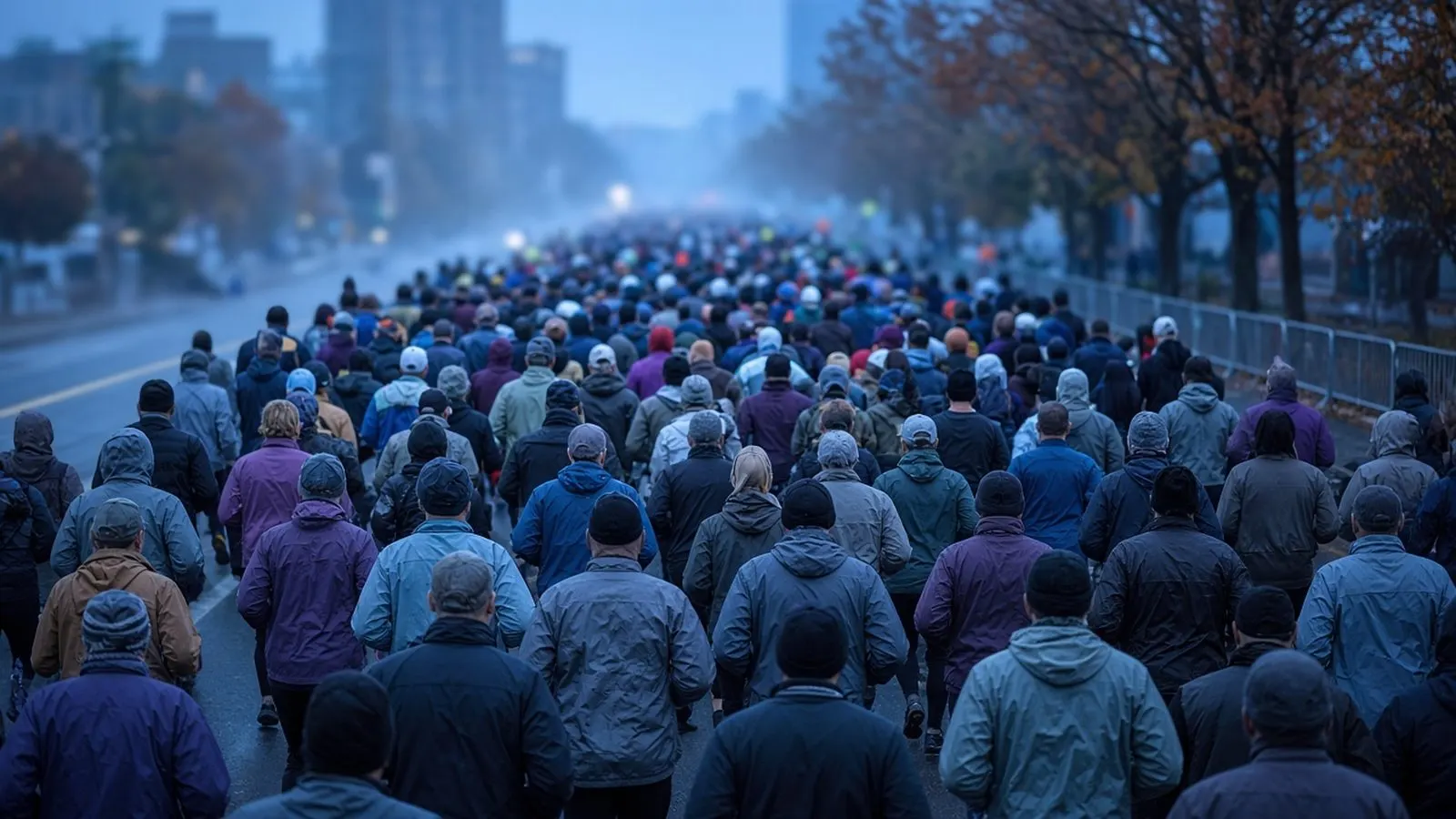
November marathons are tricky to dress for, because you spend a long time cold before you spend a long time hot. The biggest one of all is close. The 2026 TCS New York City Marathon runs on Sunday, November 1, and it marks the 50th anniversary of the five-borough course, first run in 1976, according to New York Road Runners. NYRR received a record 240,000-plus applications for the drawing, and only about one percent of applicants got in. The 2025 race set a world record as the largest marathon ever, with 59,226 finishers.
If you’re one of the runners lining up on November 1, or at any big late-fall race, here’s your kit, hour by hour.
Night before: lay it out#
Pin your bib to the shirt you’ll actually race in. Not to the layer on top. You’ll be taking that off.
Lay everything out on the floor in the order you’ll put it on. Shoes, socks, shorts or tights, shirt, bib, watch, gels. Then the throwaway pile next to it. If something’s missing, you’ll see it now and not at 5 a.m.
Charge the watch. Charge the phone. Check the weather again, and then stop checking.
Early morning: travel to the start#
Big-city marathons mean a long wait between leaving home and starting to run. Transport, security, the walk to your corral, then standing around. That’s the part that catches first-timers out.
Dress for the wait, not the race.
That means throwaway layers. Old sweatshirt. Old sweatpants you can step out of. A cheap fleece hat and gloves. Something to sit on that you don’t mind leaving behind. Many big races collect discarded clothing at the start, so check your race’s own guidance on where to drop it. Don’t wear anything you want back.
A trash bag with a hole cut for your head is ugly and it works. It blocks wind and keeps rain off. Runners have been doing this forever because it’s cheap and it’s disposable.
In the corral: stay warm, stay loose#
Keep the throwaways on as long as you can. Shed the bottom layer first, then the top layer just before you move toward the start line.
Hands get cold fastest. Cheap gloves are the last thing to go, and you can run the first few miles in them and toss them later.
Stay off your feet if you can. Sitting on a scrap of cardboard or that old fleece is better than shifting from foot to foot for an hour.
The start: what you’re actually running in#
Here’s where November gets confusing. You were cold in the corral. You’ll be warm within a couple of miles.
The common mistake is overdressing for the race because you were freezing at the start. A good rule many coaches use: dress as if it’s warmer than it is, because your body will heat up fast. If you’re cold standing still in your race kit, that’s probably about right.
For most runners in most November conditions, that’s a singlet or short-sleeve shirt, shorts or light tights, and arm sleeves you can push down. Arm sleeves are the best piece of kit for a cool race. Warm at the start, rolled down at mile six, off at mile ten.
If the New York start is your race, you’ll begin on the Verrazzano-Narrows Bridge, which is exposed. Wind on a bridge can feel a lot colder than the forecast. Keep the gloves and a light layer on for the climb, then dump them on the other side once you’ve warmed up.
Miles 1 to 13: settle in#
Small adjustments only. Roll the sleeves down when you feel warm. Take the gloves off and tuck them in your waistband if you’ll want them again.
Chafing starts early and shows up late. Anti-chafe balm on the places you know you rub, applied before you leave home. If you’ve never had a problem in training, don’t add anything new now. Our guide to seams, chafing and flatlock construction explains why some kit rubs and some doesn’t.
Miles 13 to 20: watch the weather#
A November day can change during a marathon. Cloud comes over. Wind picks up. Rain starts.
If it gets colder, the sleeves go back up. If it rains, a cap with a brim keeps water out of your eyes, which matters more than keeping your head dry.
Shoes and socks. Again: the ones you trained in. Wet socks blister in ways dry socks don’t. Merino or synthetic, never cotton. If you’ve done a long run in the rain in your race socks, you know they work.
Miles 20 to 26.2: nothing changes#
You won’t be thinking about kit by now. That’s the goal. If your clothes are doing their job, you’ve forgotten you’re wearing them.
The finish: get warm, fast#
Here’s where November bites again. You stop running, and within minutes you’re shaking.
Your body has been generating a huge amount of heat for hours. When you stop, that heat drops and the sweat on your skin goes cold. Many big races hand out heat sheets at the finish. Take one. Wrap it around you properly.
Then get into dry clothes as soon as you can. If you checked a bag or have someone meeting you, that bag should hold a warm, dry top, a jacket, a hat, dry socks and comfortable shoes that aren’t your race shoes. Your feet will thank you. Our guide to layering for cold weather covers what to put in that post-race bag.
One more thing#
The defending champions, Hellen Obiri and Benson Kipruto, are back on November 1 to defend their titles, World Athletics reports. Obiri set the course record of 2:19:51 last year.
They’ll be dressed in about as little as possible. You don’t have to be. For the rest of us, the throwaway layers are the most important kit of the day. Buy them at a thrift store, wear them for an hour, and leave them behind without a second thought.